
ANPR vs Traditional Parking What Operators Are Asking in 2026
- David Wu

- Apr 12
- 4 min read
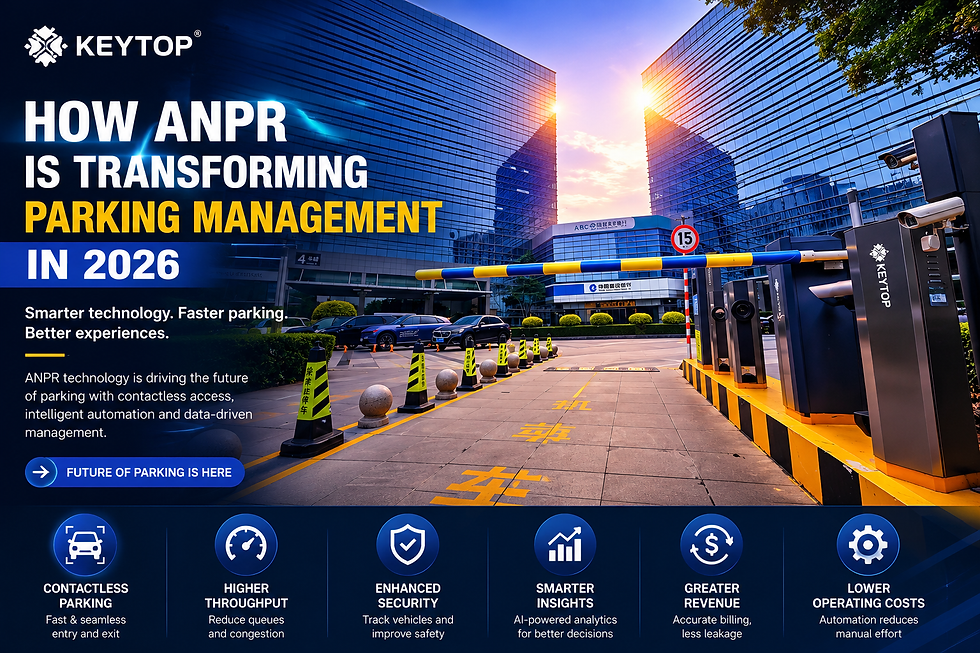
Parking management is evolving rapidly. In 2026, many operators are shifting from traditional parking systems to ANPR ticketless parking. This change is driven by the need for efficiency, accuracy, and better user experience. I will explore the differences between these systems, the key questions operators have, and why ANPR is becoming the preferred choice.
Traditional Parking Systems and Their Limitations
Traditional parking systems usually rely on tickets, barriers, and manual checks. When a vehicle enters, the driver takes a paper ticket. This ticket is used to calculate parking time and fees. Payment happens at a kiosk or exit booth, often requiring staff presence.
While this system has been standard for decades, it has several limitations:
Ticket handling: Paper tickets can be lost or damaged, causing delays and disputes.
Manpower needs: Staff are required to manage entry, payment, and enforcement, increasing operational costs.
Congestion: Vehicles queue at entry and exit points, especially during peak hours.
Revenue leakage: Manual errors and ticket fraud can lead to lost income.
These issues affect both operators and users. Operators face higher costs and lower efficiency. Users experience frustration and delays.
How ANPR Ticketless Parking Systems Work
ANPR (Automatic Number Plate Recognition) parking systems use cameras and software to identify vehicles by their license plates. This technology enables ticketless parking, removing the need for physical tickets or barriers in many cases.
Here is a typical step-by-step process of an ANPR parking system:
Entry: Cameras capture the vehicle’s license plate as it enters the parking area.
Recognition: The system matches the plate to a database, logging the entry time.
Parking: The vehicle parks without needing a ticket or barrier interaction.
Payment: Payment can be made via mobile apps, online portals, or automated kiosks. Some systems allow pre-registration or subscription models.
Exit: Cameras read the license plate again to confirm payment and allow exit, often without stopping.
This process reduces friction and improves flow. It also provides operators with detailed data on parking usage.

Operator Questions in 2026
As operators consider switching to ANPR parking systems, several key questions arise:
Accuracy and Enforcement Reliability
Operators want to know if ANPR systems can reliably read plates in all conditions. Factors like weather, dirty plates, or unusual fonts can affect accuracy.
Modern ANPR systems use AI and machine learning to improve recognition rates. Many achieve over 98% accuracy, reducing enforcement errors. Integration with parking management systems allows real-time alerts for unpaid vehicles.
ROI Comparison
The return on investment is critical. Operators compare the costs of installing ANPR cameras and software against savings from reduced staff, fewer disputes, and less revenue leakage.
Studies show that while initial costs are higher, ANPR systems pay off within 2-3 years due to operational savings and increased revenue capture.
Need for Barriers vs Barrierless Systems
Some operators ask if barriers are still necessary. Barrierless ANPR systems allow free flow but require strong enforcement mechanisms.
Barriers add physical control but can cause congestion. Many operators choose hybrid models: barriers at entry with ANPR for exit, or vice versa.
Dynamic Pricing and Analytics
ANPR systems enable dynamic pricing based on demand, time, or user type. Operators can use data analytics to optimize space usage and revenue.
This flexibility is difficult with traditional ticket systems. Analytics also help in planning and maintenance.
Legal and Data Privacy Concerns
Collecting license plate data raises privacy questions. Operators must comply with local laws on data protection and inform users about data use.
Secure data storage and limited access are essential. Many ANPR providers offer compliance support and transparent policies.
Industry Shift Toward Smart City and AI-Driven Parking
The parking industry is moving toward smart city integration. AI-driven parking management systems connect with traffic control, public transport, and urban planning.
Data from ANPR systems supports:
Real-time space availability updates
Automated enforcement and payment
Predictive analytics for demand forecasting
Integration with mobile apps for seamless user experience
This shift improves urban mobility and reduces congestion.

Why Keytop Stands Out in ANPR Parking Systems
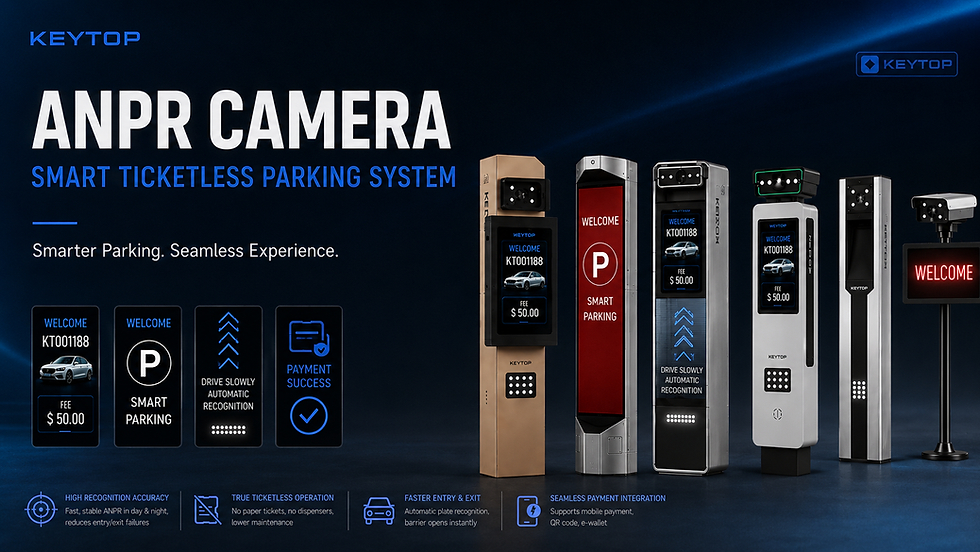
Keytop Smart Parking Solutions offers advanced ANPR camera systems combined with an integrated parking management platform. Their solutions support both barrier and barrierless operations, with seamless payment integration.
Keytop’s global deployment experience means their systems are tested in diverse environments, ensuring reliability and compliance with local regulations.
For example, their ANPR camera system provides high accuracy in various weather conditions. The integrated platform offers real-time monitoring, dynamic pricing, and detailed analytics.
Operators can choose from barrier or barrierless setups depending on their needs. Payment options include mobile apps, online portals, and contactless methods.
Learn more about Keytop’s ANPR camera systems and parking management platform.

Summary
ANPR ticketless parking systems address many challenges of traditional parking. They improve accuracy, reduce congestion, and enable data-driven management. Operators in 2026 focus on system reliability, ROI, enforcement methods, pricing flexibility, and privacy compliance.
The industry is moving toward smart city integration with AI-powered parking management. Keytop Smart Parking Solutions offers proven ANPR systems and platforms that support this transition.
Switching to ANPR is becoming the new standard for efficient, user-friendly parking management.
FAQ
1. How accurate are ANPR parking systems?
Modern ANPR systems achieve over 98% accuracy using AI technology, even in challenging conditions like rain or low light.
2. Can ANPR systems work without barriers?
Yes, barrierless ANPR systems allow free vehicle flow but require strong enforcement and payment controls to prevent misuse.
3. What is the typical ROI timeframe for ANPR systems?
Operators usually see return on investment within 2-3 years due to savings on staff and reduced revenue loss.
4. How do ANPR systems support dynamic pricing?
They collect real-time data on parking demand, enabling operators to adjust prices based on time, occupancy, or user type.
5. Are there privacy concerns with ANPR data?
Yes, operators must comply with data protection laws, secure data storage, and inform users about data collection and use.
Meta description:
Explore the shift from traditional parking to ANPR ticketless systems in 2026. Learn key operator questions and how Keytop supports smart parking solutions worldwide.

Comments